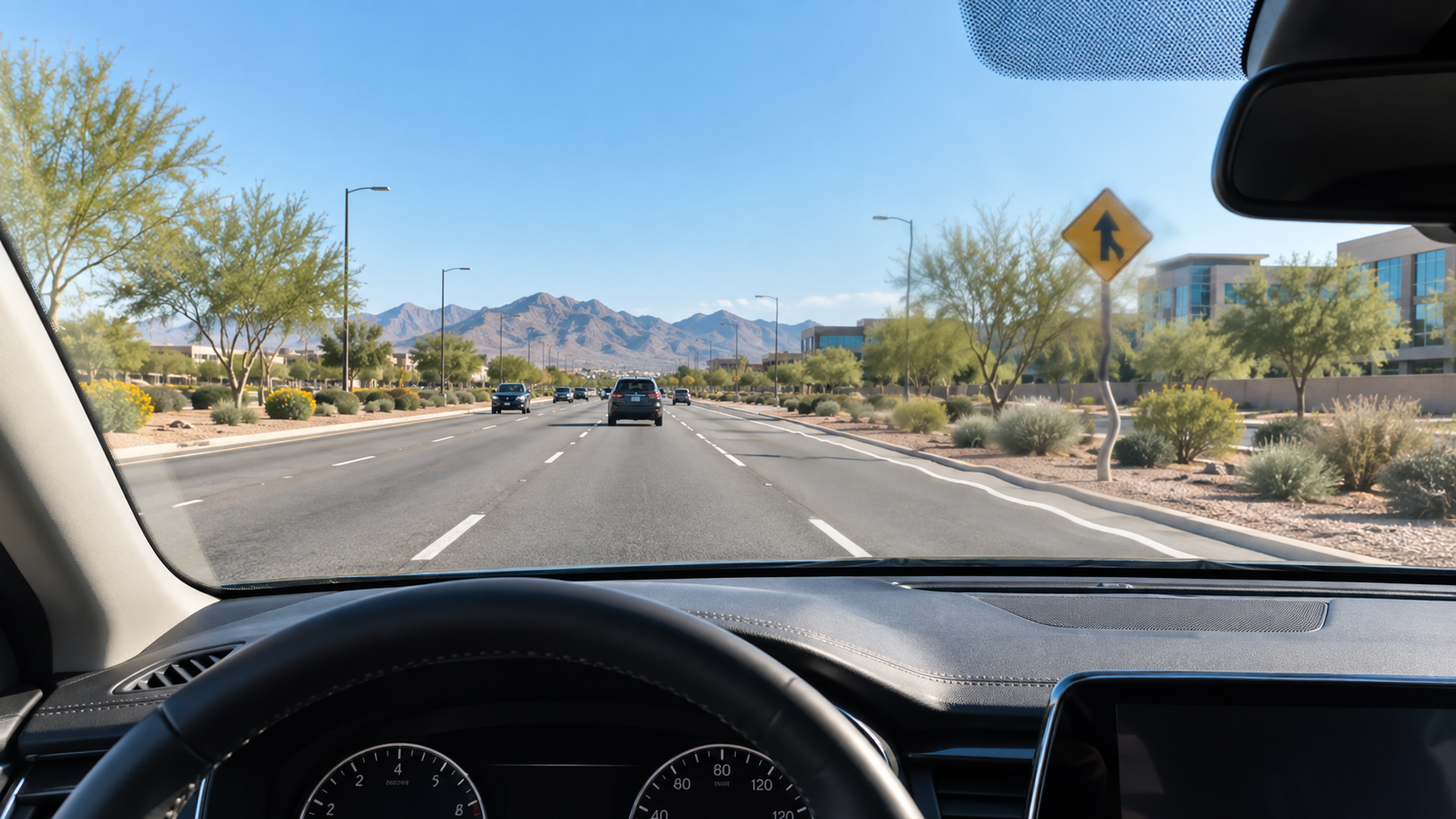
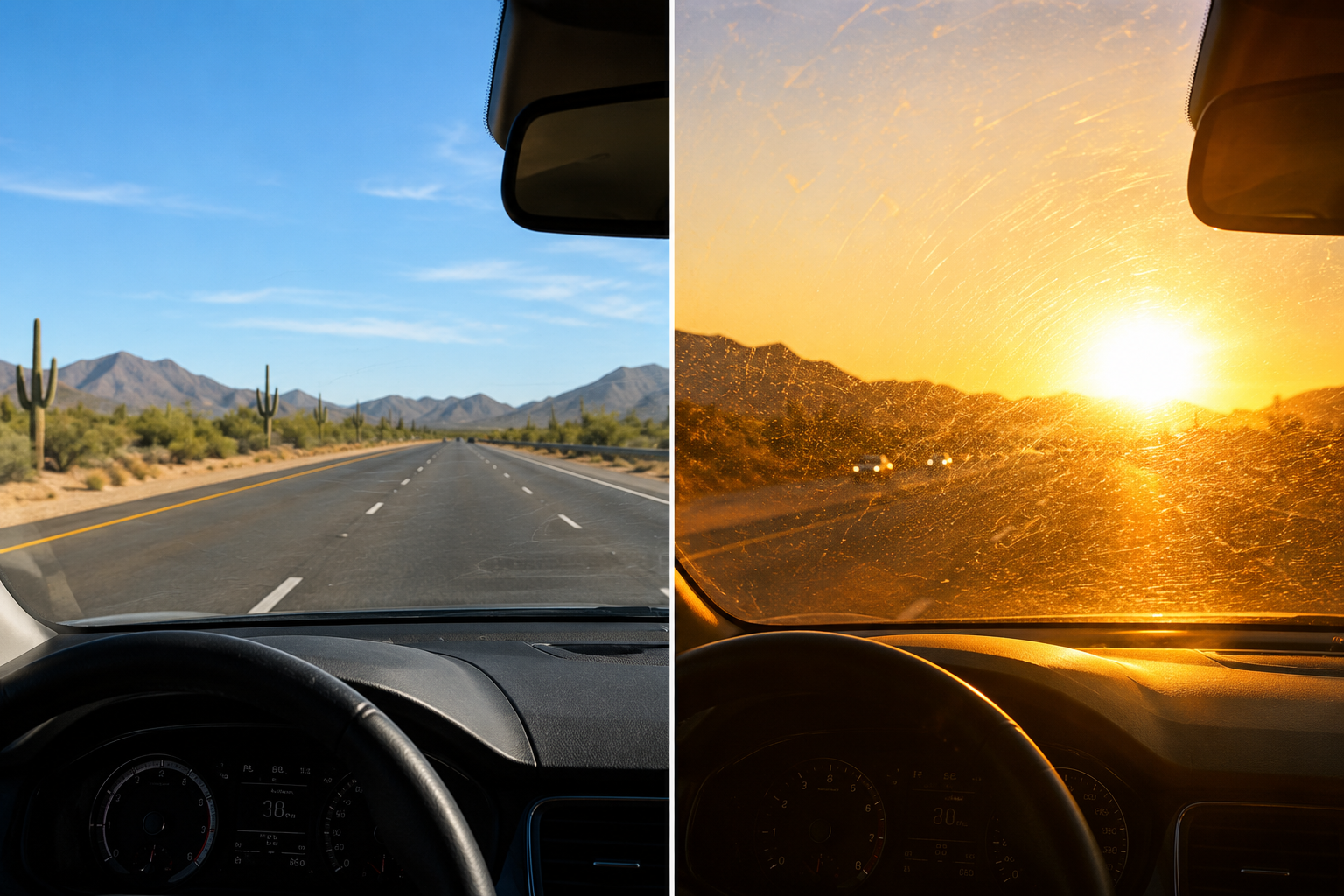
Have you ever looked through your windshield during the middle of the day and thought everything seemed perfectly normal?
Then a few hours later, you're driving directly into the sunrise or sunset and suddenly every scratch, pit, and imperfection becomes impossible to ignore.
Many Arizona drivers assume something has changed overnight.
It hasn't.
The damage was already there.
Arizona's intense sunlight is simply exposing it.
Why Windshields Look Different at Different Times of Day
Light behaves differently depending on the angle at which it strikes the glass.
During the middle of the day, sunlight is generally coming from above. Minor windshield imperfections often blend into the background and go unnoticed.
During sunrise and sunset, however, the sun sits much lower on the horizon.
As light passes through the glass at a shallow angle, even tiny imperfections can scatter that light and create glare, haze, and visual distortion.
Suddenly, small flaws that were practically invisible a few hours earlier become impossible to ignore.
Arizona Makes the Problem Worse
Arizona drivers experience some of the most challenging windshield conditions in the country.
The combination of intense sunlight, desert dust, freeway driving, and frequent road debris creates the perfect environment for gradual windshield wear.
Many drivers commute daily on roads such as Loop 101, Loop 202, SR-51, Interstate 10, and US-60.
Every mile exposes the windshield to tiny particles of dust, sand, and debris.
Most of these impacts are too small to notice individually.
Over time, however, they add up.
What Is Windshield Pitting?
Windshield pitting occurs when thousands of tiny impacts gradually wear down the surface of the glass.
Unlike a rock chip, pitting doesn't happen all at once.
It develops slowly over months and years.
Most drivers don't notice the process because each individual impact is insignificant.
The problem becomes obvious when sunlight begins reflecting through those tiny imperfections.
What looked like clear glass during the day can suddenly appear cloudy or distorted during sunrise and sunset.
Why Newer Vehicles Make It More Noticeable
Many modern vehicles offer a quieter and more refined driving experience than older cars.
Less road noise and fewer distractions often make drivers more aware of visual issues.
Advanced safety systems, large displays, and driver-assistance technology also encourage drivers to pay closer attention to what they see through the windshield.
As a result, many people notice windshield imperfections sooner than they would have in previous vehicles.
Can Windshield Pitting Be Repaired?
Unfortunately, windshield pitting is different from a rock chip.
A single chip can often be repaired if addressed early.
Pitting affects the surface of the glass across a much larger area.
Once the damage reaches a certain point, replacement is often the most effective solution for restoring optical clarity.
The key is recognizing the problem before visibility becomes a safety concern.
When Should You Be Concerned?
If glare during sunrise or sunset is becoming distracting, it may be time to have your windshield evaluated.
Common warning signs include:
- Excessive glare from oncoming headlights
- Hazy visibility during sunrise or sunset
- Noticeable surface pitting
- Difficulty seeing clearly in bright conditions
Many drivers adapt to gradual windshield wear without realizing how much visibility they have lost.
A professional evaluation can help determine whether repair or replacement is the best option.
Final Thoughts
If your windshield seems dramatically worse during sunrise and sunset, you're not imagining it.
Arizona's intense sunlight simply highlights imperfections that are already present in the glass.
Over time, freeway driving, dust, debris, and normal wear can create surface damage that becomes increasingly noticeable when light hits the windshield at certain angles.
A clear windshield isn't just about appearance.
It's about visibility, comfort, and safety every time you get behind the wheel.
At ProView Auto Glass & Tint, we help drivers throughout Scottsdale, Paradise Valley, Phoenix, Mesa, Gilbert, Chandler, and surrounding communities evaluate windshield damage and restore the clarity they depend on every day.